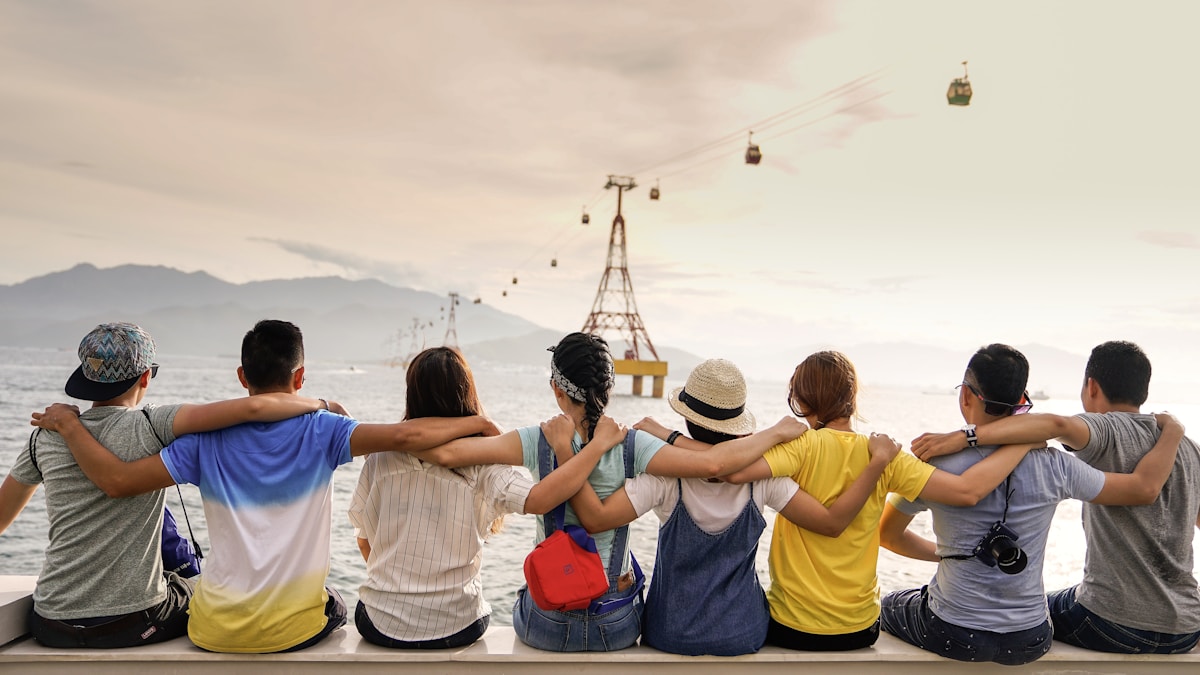
Building Community Through Fitness: How Outdoor Activities Create Lasting Connections
 Derek Palmisano
Building Community Through Fitness: How Outdoor Activities Create Lasting Connections
In an age of digital connection and physical isolation, the simple act of exercising together outdoors has emerged as a powerful antidote to loneliness and social fragmentation. BeachFit exists because we believe that community wellness begins with shared movement in natural spaces. This post explores how outdoor fitness activities naturally foster authentic relationships and create the social infrastructure that modern communities desperately need.
The Social Architecture of Group Exercise
Human beings evolved to move together. For millennia, our ancestors hunted, gathered, migrated, and played in groups. This evolutionary heritage means that physical activity naturally creates social bonds when experienced collectively rather than in isolation.
Research on social connection reveals that the quality of our relationships significantly impacts health outcomes, rivaling traditional risk factors like smoking, obesity, and physical inactivity. Strong social connections reduce risks for heart disease, stroke, dementia, depression, and premature mortality while improving immune function and accelerating recovery from illness. The Centers for Disease Control and Prevention now recognizes social connection as a fundamental determinant of health, not merely a lifestyle preference.
Group exercise leverages this biological and psychological reality by combining two powerful health interventions: physical activity and social interaction. When we exercise together outdoors, we're not simply adding social benefits to physical benefits—we're creating synergistic effects where each element enhances the other.
From Strangers to Fitness Friends: The Progression of Connection
Community building through fitness follows predictable stages, each deepening the relationships and strengthening commitment to both the activity and the social group.
Initial Contact: Shared Experience as Foundation
The first interaction at a BeachFit event might feel awkward. You're meeting strangers, uncertain about your fitness level relative to others, and navigating new social dynamics. This initial discomfort is normal and temporary.
What makes outdoor group exercise unique is that the activity itself provides natural conversation starters and shared focus. Unlike social gatherings where conversation carries the entire interaction, group exercise offers built-in structure. You're all there for the same purpose, facing the same challenges, experiencing the same environment. This shared context creates immediate common ground.
Research on group formation shows that shared challenges accelerate bonding. When you struggle up a hill together, navigate a trail, or push through the final mile of a run, you're creating shared memories that form the foundation of relationships. The physical challenge serves as a social equalizer—everyone experiences difficulty, everyone shows vulnerability, and everyone supports each other through it.
Regular Participation: Familiarity Breeds Connection
Attending the same type of activity regularly transforms casual acquaintances into familiar faces. You begin recognizing people, remembering names, and developing inside jokes or shared references. This familiarity creates psychological safety—the sense that you belong and are accepted within the group.
Studies on exercise adherence demonstrate that social familiarity significantly predicts continued participation. People who develop friendships within fitness groups show adherence rates 2-3 times higher than those who remain socially disconnected. The commitment shifts from "I should exercise" to "I want to see my friends," transforming obligation into anticipation.
BeachFit's recommendation algorithm helps facilitate this progression by surfacing activities from hosts and categories you've previously enjoyed. This increases the likelihood of seeing familiar faces at events, accelerating the transition from stranger to community member.
Deepening Relationships: Beyond the Activity
The most meaningful stage occurs when relationships extend beyond scheduled activities. You exchange phone numbers, connect on social media, or use BeachFit's Fit Friends feature to stay in touch. Conversations expand beyond fitness to include work, family, challenges, and aspirations. You might coordinate carpools to events, grab coffee afterward, or plan additional activities together.
This progression mirrors the development of any meaningful friendship, but the fitness context provides unique advantages. You've already demonstrated shared values (health, outdoors, community), compatible schedules (you can attend the same events), and mutual commitment (you both show up consistently). These factors significantly increase the likelihood that initial connections will develop into genuine friendships.
The Host as Community Architect
While participants build community through attendance, hosts play a special role as community architects. By creating and leading activities, hosts provide the structure around which communities form.
Creating Welcoming Environments
Effective hosts understand that their primary role extends beyond organizing logistics to facilitating social connection. Simple practices dramatically impact participant experience and community formation:
Personal Welcomes: Greeting each participant individually, especially newcomers, signals that they're noticed and valued. A brief introduction—"I'm glad you're here, this is your first time, right? Let me introduce you to a few regulars"—can transform a newcomer's experience from anxious to welcomed.
Group Introductions: For smaller activities (under 15 participants), brief group introductions allow everyone to learn names and share a sentence about themselves. This simple practice breaks the ice and gives participants conversation starters.
Pace Accommodation: Hosting activities that accommodate varied fitness levels through multiple pace groups or built-in regrouping points ensures that slower participants don't feel left behind or pressured beyond their capabilities.
Post-Activity Social Time: Building in informal social time after activities—even just 10-15 minutes—allows relationships to develop beyond the structured exercise. This might be as simple as gathering in a parking area to chat or coordinating a coffee shop meetup.
Consistency and Reliability
Community forms around predictable patterns. Hosts who establish regular schedules—"Saturday morning trail run, every week at 8 a.m."—create anchors in participants' lives. This consistency allows people to plan around activities, building them into routines rather than treating them as occasional events.
The BeachFit Host Dashboard provides analytics showing repeat participation rates, helping hosts understand which activities successfully build community versus those that attract one-time participants. High repeat rates indicate that an activity is fostering connection, not just providing exercise.
Distributed Leadership and Community Ownership
The strongest communities distribute leadership rather than concentrating it in a single host. Experienced participants might co-host activities, lead warm-ups, or take responsibility for specific aspects like route planning or social coordination. This shared ownership creates investment and resilience—the community doesn't depend on a single person's continued availability.
BeachFit's trust and verification system supports this distributed model by building reputation across the community. Participants with high trust scores and consistent attendance become natural candidates for co-hosting or eventually creating their own activities.
Diversity and Inclusion: Strength Through Variety
Healthy communities embrace diversity across multiple dimensions: fitness levels, ages, backgrounds, and interests. This diversity enriches everyone's experience and prevents communities from becoming insular or exclusive.
Multi-Generational Fitness
Family-friendly activities create opportunities for multi-generational participation. Parents exercising alongside children model healthy behaviors while building family bonds. Older adults participating in activities with younger people combat age segregation and share wisdom across generations. These interactions create richer community fabric than age-segregated activities.
Varied Activity Types
Communities built around diverse activity types (walks, runs, sports, water activities, creative movement) attract broader participation than those focused narrowly on a single activity. BeachFit's category system encourages hosts to offer variety, allowing community members to experience different challenges together while discovering new interests.
Accessibility and Accommodation
Truly inclusive communities actively work to accommodate varied abilities and circumstances. This might include offering beginner-specific activities, providing clear difficulty ratings, choosing accessible locations, or scheduling activities at varied times to accommodate different work schedules.
The goal isn't to make every activity accessible to everyone—some activities appropriately target specific fitness levels or skills. Rather, the community as a whole should offer entry points for diverse participants, ensuring that anyone interested in outdoor fitness can find appropriate activities.
Navigating Community Challenges
Like any social system, fitness communities face challenges that require thoughtful navigation.
Cliques and Exclusivity
As regular participants develop close friendships, there's natural tendency toward clique formation. While close friendships are positive, they can inadvertently create barriers for newcomers who perceive the group as closed or unwelcoming.
Conscious effort to welcome new participants, make introductions, and include newcomers in conversations prevents clique formation from becoming exclusionary. Hosts can model this behavior, and experienced participants often follow suit.
Competitive Dynamics
Some participants approach group activities competitively, focusing on pace, distance, or performance metrics. While friendly competition can motivate, excessive competitiveness creates pressure that discourages less fit or less competitive participants.
Establishing community norms that emphasize personal progress over comparison helps manage competitive dynamics. Hosts can reinforce these norms by celebrating effort and consistency rather than only recognizing top performers.
Conflict Resolution
Disagreements inevitably arise in any community—about pace, route choices, scheduling, or interpersonal issues. Addressing conflicts directly but respectfully maintains community health. BeachFit's review system allows participants to provide feedback about activities and hosts, creating accountability while allowing hosts to improve.
For serious issues involving safety concerns or violation of community guidelines, BeachFit's reporting mechanisms ensure that problems can be addressed at the platform level.
The Ripple Effects of Fitness Community
The benefits of fitness communities extend far beyond the immediate participants and scheduled activities.
Broader Social Networks
Relationships formed through fitness activities often expand into broader social networks. Fitness friends introduce you to their friends, creating extended networks. You might discover that a running partner works in your industry, leading to professional connections. A hiking buddy might share your interest in photography, leading to new collaborations.
These expanded networks combat the social isolation that characterizes modern life, where many people's social interactions are limited to immediate family and coworkers.
Community Resilience
Communities built around outdoor fitness demonstrate resilience during challenging times. During the COVID-19 pandemic, outdoor exercise groups provided some of the few safe opportunities for social interaction. Participants supported each other through difficulty, checked in on isolated members, and adapted activities to maintain connection while respecting safety protocols.
This resilience extends to individual challenges. When community members face illness, injury, job loss, or personal crises, the social support network provides both practical assistance and emotional support.
Civic Engagement
Research suggests that participation in community organizations, including fitness groups, predicts broader civic engagement. People who regularly participate in group activities are more likely to vote, volunteer, and engage in community improvement efforts. The social capital built through fitness communities can catalyze broader community development.
Measuring Community Success
How do you know if a fitness community is thriving? Several indicators reveal community health:
Retention and Repeat Participation: High rates of repeat attendance indicate that participants find value beyond the exercise itself. BeachFit's Host Dashboard tracks these metrics, showing which activities successfully build community.
Organic Growth: Thriving communities grow through word-of-mouth as participants invite friends and family. This organic growth indicates genuine enthusiasm and satisfaction.
Distributed Leadership: When multiple community members host activities, co-lead, or take initiative to support the group, it demonstrates shared ownership and investment.
Relationship Depth: Superficial communities involve only activity participation. Deeper communities feature relationships that extend beyond scheduled events—social gatherings, mutual support during challenges, and genuine friendships.
Inclusivity: Healthy communities welcome newcomers, accommodate diverse fitness levels, and actively work to ensure everyone feels valued.
Your Role in Community Building
Every BeachFit participant contributes to community formation, whether as a host or participant. Simple actions amplify community building:
Show Up Consistently: Regular attendance allows relationships to develop and signals commitment to the community.
Welcome Newcomers: Introduce yourself to new faces, offer encouragement, and help them feel included.
Express Appreciation: Thank hosts for organizing activities, acknowledge others' efforts, and leave thoughtful reviews that help the community learn and improve.
Extend Invitations: Invite friends, family, or coworkers to activities. Personal invitations are powerful recruitment tools.
Offer to Help: Volunteer to co-host, help with logistics, or support hosts in other ways. Distributed effort strengthens communities.
Stay Connected: Use BeachFit's Fit Friends feature to maintain relationships, send encouraging messages, and coordinate additional activities.
The Larger Vision: Communities That Heal
BeachFit's mission extends beyond individual fitness to community healing. We envision neighborhoods where people know their neighbors, where loneliness is rare because connection is abundant, and where health is pursued collectively rather than individually.
This vision becomes reality one activity at a time, one relationship at a time, one community at a time. When you join a BeachFit activity, you're not just exercising—you're participating in a movement to rebuild the social fabric that modern life has frayed.
The outdoor fitness communities forming through BeachFit represent a return to fundamental human patterns: moving together, supporting each other, and finding belonging through shared experience. These communities prove that the antidote to isolation isn't more technology or more programs—it's simply showing up, moving together, and allowing natural human connection to flourish.
Your participation matters. Every time you attend an activity, host an event, or welcome a newcomer, you're building community. These small acts accumulate into transformed neighborhoods, stronger social networks, and healthier, more connected lives.
The community you're seeking is forming right now, one outdoor activity at a time. Join us.
References
Centers for Disease Control and Prevention. (2024). Social Connection. Retrieved from https://www.cdc.gov/social-connectedness/about/index.html
Brady, S., et al. (2018). Reducing Isolation and Loneliness Through Membership in a Fitness Program for Older Adults: Implications for Health. Journal of Aging and Health. Retrieved from https://journals.sagepub.com/doi/abs/10.1177/0733464818807820
Adherence to community based group exercise interventions for older people. (2016). Preventive Medicine, 85:155-159. Retrieved from https://www.sciencedirect.com/science/article/pii/S0091743516300147
Ryan, R. M., et al. (1997). Intrinsic motivation and exercise adherence. International Journal of Sport Psychology, 28:335-354. Retrieved from https://selfdeterminationtheory.org/SDT/documents/1997_RyanFrederickLepesRubioSheldon.pdf